

The demand for new homes in Maricopa, AZ, has ignited an unprecedented construction boom, transforming this Sonoran Desert city into a national leader for residential development. For property owners, developers, and prospective homeowners, understanding the mechanics of this growth is critical. With its compelling affordability and strategic location, Maricopa has become one of the most dynamic and viable housing markets in the Southwest.
Why Maricopa Is Arizona’s New Construction Hotspot
This is not a localized trend; the expansion in Maricopa reflects a larger, national shift. As a contractor, understanding the forces driving this development is fundamental to making sound investment decisions. Maricopa has effectively become a magnet for buyers seeking superior value without sacrificing proximity to the employment and amenities of the greater Phoenix metropolitan area.
This intense demand has mobilized builders at every scale. The market is now a mix of large-scale production builders developing entire master-planned communities and specialized general contractors executing high-end custom homes. This variety creates a robust marketplace with options across a wide spectrum of budgets and project scopes.
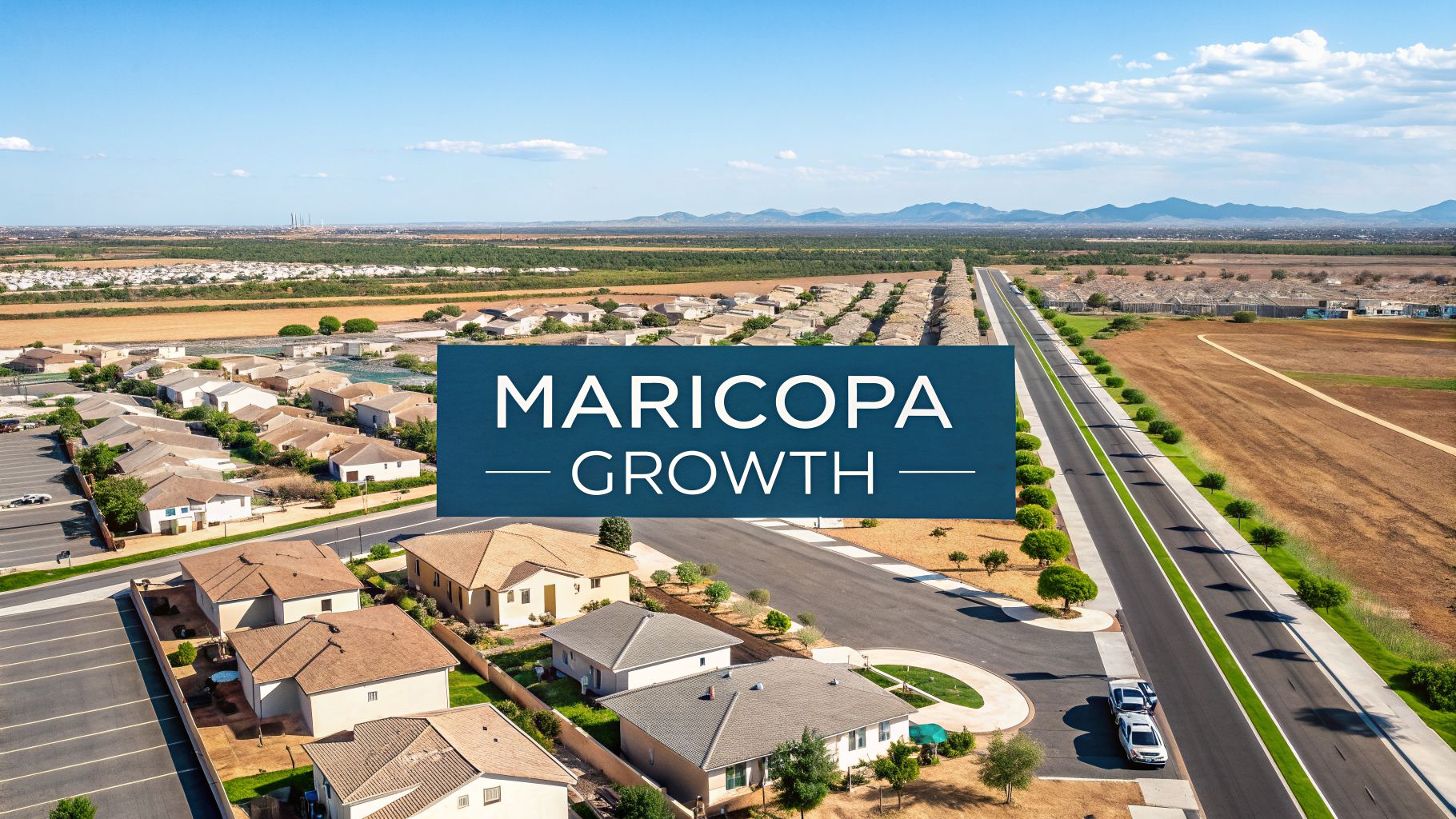
A National Epicenter For Growth
The scale of residential construction here is remarkable. Maricopa County now leads the entire nation in new home construction permits, surpassing even major hubs like Los Angeles and Houston. Housing data reveals that the county added over 38,000 new housing units in 2024 alone—a significant figure in the context of a nationwide housing shortage. For a deeper dive into Arizona’s role as a construction leader, visit azhousingforall.com.
This level of output is the direct result of several key factors converging to create an ideal environment for large-scale development.
As a general contractor, we see the blueprint for this growth every day. It’s a powerful combination of available land, a pro-growth city posture, and a steady stream of buyers who see the long-term value in establishing roots here. This isn’t just a housing boom; it’s community-building on a massive scale.
The Core Drivers Of Maricopa’s Expansion
From a construction and development perspective, three primary forces are fueling the market for new homes in Maricopa, AZ:
- Compelling Affordability: This is the primary market driver. Compared to established submarkets like Scottsdale or Chandler, Maricopa’s price point for new construction is significantly lower. This value proposition allows buyers to secure a larger, newly constructed home for a cost that might only afford an older, smaller property elsewhere in the Phoenix area.
- A Surge In New Residents: Arizona remains a top destination for domestic migration, and Maricopa is absorbing a substantial portion of this influx. These new residents are drawn by a robust job market, favorable climate, and the opportunity to own a modern home built to current standards.
- Proactive Builder Investment: Both national and local builders anticipated this demand, investing heavily in land acquisition. They are now delivering well-designed master-planned communities. For buyers and investors, this builder competition results in more choices, innovative designs, and attractive financial incentives.
This guide serves as a professional roadmap for navigating this fast-moving market. Whether you are evaluating a production home investment or planning a ground-up custom build, the following insights will equip you to proceed with confidence.
Exploring Top New Home Communities And Builders
We have established the market forces making Maricopa a construction hub. However, for a homeowner or developer, the focus shifts from macro trends to the tangible product: the communities and the homes themselves. When you begin to analyze new homes in Maricopa, AZ, you’ll find the landscape is dominated by master-planned communities, each with a distinct character and target demographic.
For anyone buying or building, selecting the right community is as critical as choosing a floor plan. You are not just acquiring a structure; you are investing in a comprehensive living environment. These developments are engineered from the ground up to include parks, recreational facilities, and infrastructure designed to foster community.
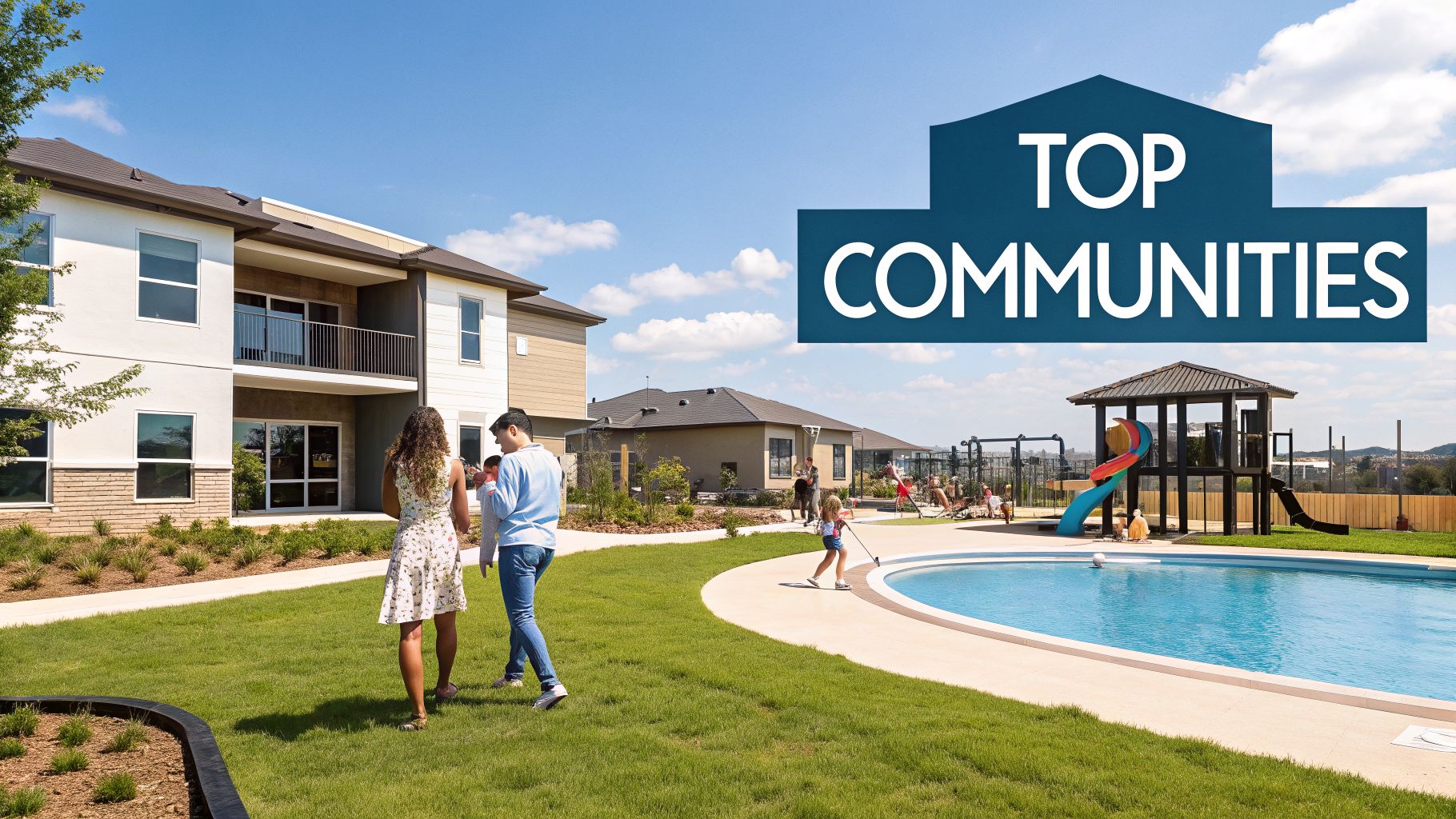
A Closer Look At Maricopa’s Master-Planned Communities
The sheer volume of construction in Maricopa provides a diverse range of community types, from large, resort-style neighborhoods to more intimate, tight-knit enclaves. The selection process is similar to evaluating any large-scale project: you must weigh the scope of amenities against the desired atmosphere and long-term value.
Here is a brief overview of the primary community archetypes available:
- Lakeside Living: Several communities are designed around man-made lakes, creating a unique “desert oasis” environment. These developments often feature amenities like catch-and-release fishing, non-motorized boating, and waterfront lots that command a price premium.
- Family-Focused Hubs: A significant portion of new development is geared toward families. These communities are characterized by extensive park systems, playgrounds, splash pads, and organized community events, often with a K-8 school integrated into the master plan.
- Active Adult & Golf Communities: For buyers seeking a specific lifestyle, dedicated active adult or golf-centric communities are prevalent. These typically offer exclusive clubhouses, advanced fitness centers, and a full calendar of social activities, often within a gated environment.
Profiling The Key Builders In The Area
Behind every community is a builder, or more commonly, a consortium of builders. The Maricopa market features a healthy mix of national production builders and reputable local contractors. Understanding the builder’s profile provides critical insight into the expected quality, design, and price point.
Builders like D.R. Horton, Lennar, and Richmond American Homes operate at a massive scale. This generally translates to competitive pricing and a wide array of standardized floor plans. They are experts at creating large, amenity-rich communities with a streamlined purchasing process.
Conversely, regional and local builders may offer greater flexibility in finishes or a more personalized, hands-on construction experience. This blend of large and small firms creates a competitive environment that benefits buyers, providing a full spectrum of options for new homes in Maricopa, AZ.
As a contractor, I advise clients to prioritize due diligence on the builder’s reputation for quality control and post-closing service. A well-built home is the product of a disciplined construction process, from foundation pour to final punch list. Research the builder as thoroughly as you research the floor plan.
For instance, a builder like Oakwood Homes recently began developing in the Moonlight community with homes starting in the low $300s, demonstrating that affordability can still be found within amenity-rich master plans. Observing the operational efficiency of these large-scale builders provides valuable lessons in construction management. To see what disciplined project management looks like on the ground, feel free to browse our portfolio of residential builds.
To provide a clearer picture, here is a breakdown of some of the top communities and builders shaping the Maricopa landscape.
Snapshot Of Leading New Home Communities In Maricopa
| Community Name | Prominent Builders | Typical Price Range (2026 est.) | Key Amenities & Features |
|---|---|---|---|
| The Lakes at Rancho El Dorado | Multiple | $450,000 – $700,000+ | Man-made lake, splash pad, clubhouse, tennis & pickleball courts |
| Province (Active Adult) | Meritage Homes | $375,000 – $600,000 | 32,000 sq. ft. clubhouse, indoor/outdoor pools, fitness center, gated |
| Tortosa | D.R. Horton, Richmond American | $350,000 – $550,000 | K-8 school on-site, 11 parks, greenbelts, family-oriented events |
| Moonlight | Oakwood Homes, Century | $325,000 – $475,000 | Smart home tech standard, energy efficiency, community parks, pools |
The variety is substantial. Whether the priority is a waterfront view, a specific school district, or maximizing value, a community in Maricopa aligns with those objectives. The next critical decision is whether to purchase a new production home or undertake a full custom build.
Buying New Vs. Building Custom In Maricopa
With Maricopa selected as the target location, the next major decision point is the procurement method: purchasing a new home from a production builder or engaging a general contractor to build a fully custom home on a private lot.
There is no universally correct answer. The production path offers speed and simplicity, while the custom path provides complete design autonomy but requires greater owner involvement and a longer timeline. Let’s dissect the operational realities of each approach to help you determine the best fit for your objectives, budget, and risk tolerance.
The Production Home Path: Simplicity And Speed
When most people refer to new homes in Maricopa, AZ, they are typically describing this model. The process involves selecting a lot and floor plan within a community developed by a builder like D.R. Horton or Meritage. In industry terms, this is a “production” or “spec” home. The builder controls the land, the pre-approved designs, and the entire construction process.
The process is analogous to purchasing a new vehicle. You select a base model and then customize it from a menu of pre-approved options—upgraded flooring, different cabinet finishes, or a premium appliance package. The choices are well-defined, and you operate within the builder’s established framework.
This path offers significant advantages:
- Predictable Timelines: Production builders have refined their construction process to a science. From contract signing to closing, the typical timeframe is 6-10 months.
- Established Cost: The base price is transparent. The final cost increases with design upgrades, but the risk of major, unforeseen financial surprises is minimized.
- Simplified Process: The builder acts as a single point of contact, managing permits, inspections, and construction logistics. The buyer’s primary responsibilities are making design selections and securing financing.
However, this simplicity comes at the cost of flexibility. You cannot make structural changes like moving walls or adding windows outside of the pre-approved plans. You are buying into a highly efficient system, not commissioning a unique design.
The Custom Home Path: Ultimate Control And Personalization
The alternative is to build a truly custom home. This process begins not with a model home tour, but with a parcel of land and a unique vision. You collaborate with an architect to translate that vision into detailed blueprints and then hire a general contractor (GC)—such as Prime Builders—to execute the construction.
This is the path for those with a specific architectural vision who are unwilling to compromise. If a production home is like buying a vehicle off the lot, a custom build is akin to commissioning a bespoke automobile. Every detail, from the roof pitch to the hardware, is subject to your approval.
A custom build is a true partnership between you, your architect, and your general contractor. The GC acts as your hands-on project manager, juggling all the moving parts—subcontractors, material deliveries, city inspections, and the budget—to make sure the architectural plans are built correctly, on time, and up to code.
This level of control is unparalleled, but it demands significant owner involvement. You will be a key decision-maker throughout a project that can easily extend 12-18 months or more.
This graphic provides a clear comparison of the two journeys.
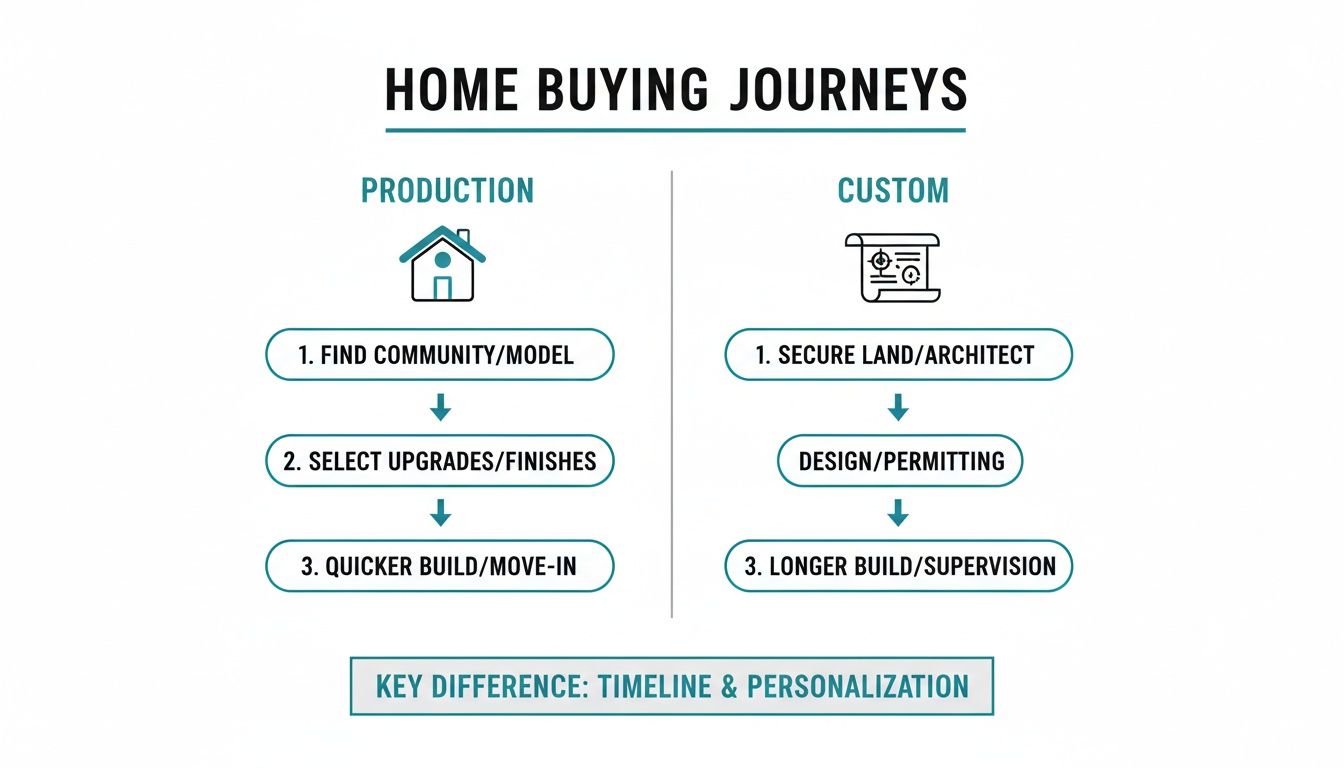
As illustrated, the production path is a linear progression. The custom path is more cyclical, involving overlapping phases of design, approvals, and intensive construction management.
Making The Right Choice For Your Maricopa Home
Ultimately, the decision hinges on your primary values.
If your priorities are speed, cost predictability, and a streamlined experience, a production home in one of Maricopa’s new communities is the logical choice. However, if your non-negotiable is a home that is a 100% unique reflection of your vision, and you are prepared for a longer and more involved project, then a custom build is the superior path.
The market demand supports both models. New home sales in Maricopa County recently surged by an impressive 43.7% year-over-year. In a dynamic market like this, new construction can account for as much as 52% of all home sales, far exceeding the national average. This is a clear indicator that whether you buy new or build custom, you are making a sound investment in a thriving area. You can explore these new construction trends further at nar.realtor.
Your Step-By-Step Custom Home Building Roadmap
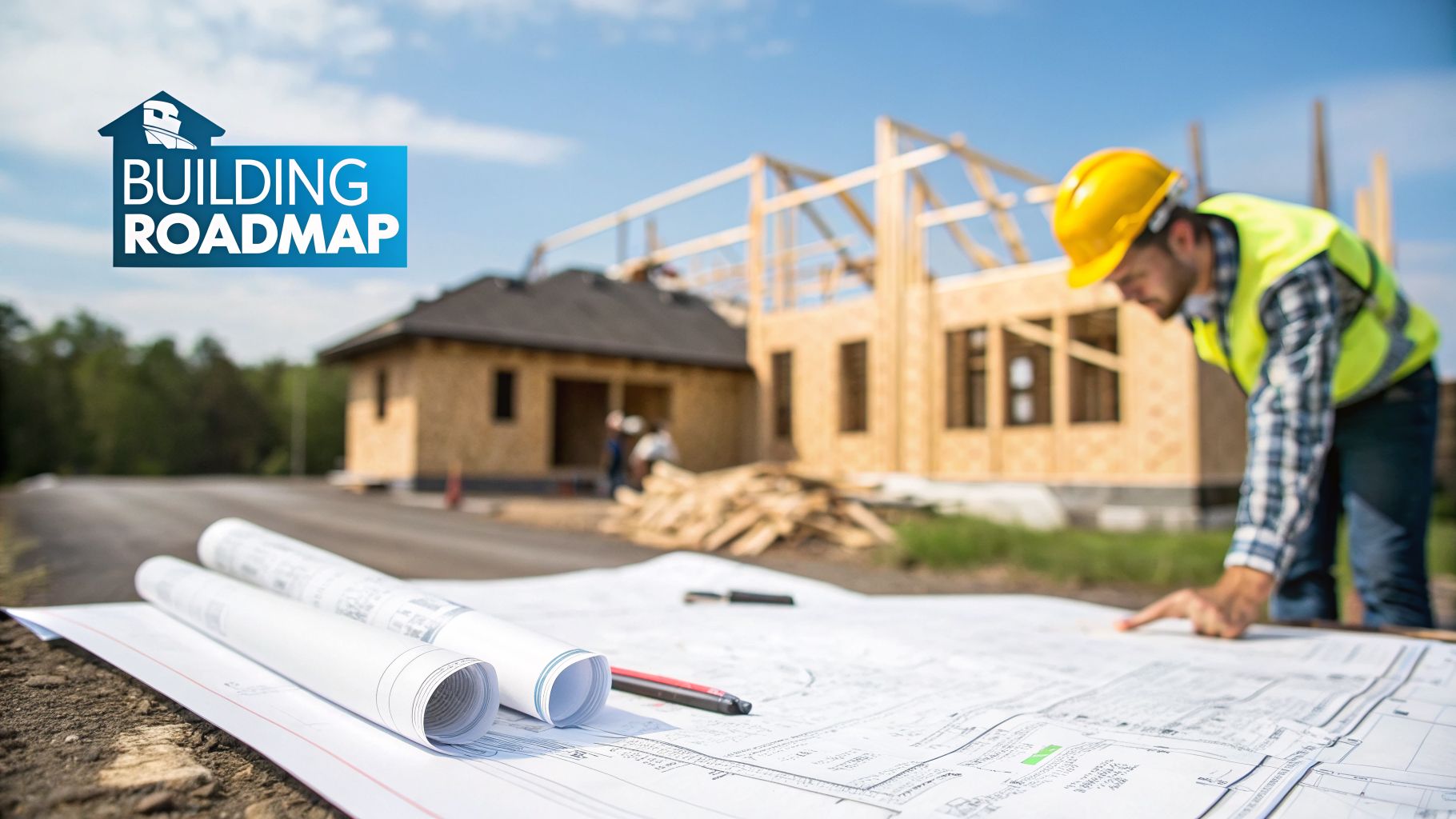
For those who prioritize a unique architectural vision over a standardized floor plan, building a custom home is the ultimate solution. However, this process requires a detailed project plan and an experienced guide. This is the primary role of a general contractor: to impose order on a complex process, transforming architectural drawings into a high-quality, fully realized home.
This roadmap outlines the critical phases of the custom building process, from land acquisition to final delivery. Understanding these stages is essential for setting realistic expectations, maintaining budget discipline, and ensuring the final product matches your original vision.
Phase 1: Pre-Construction And Feasibility
Before any earth is moved, the most critical work occurs. The pre-construction phase is dedicated to planning, due diligence, and confirming project viability from both a design and financial standpoint. In our professional experience, rushing or under-resourcing this stage is the leading cause of budget overruns and significant delays during construction.
Consider this phase analogous to expedition planning. You wouldn’t embark on a major trek without mapping the route, checking your equipment, and securing provisions. Pre-construction is that same essential preparation for your home.
Key steps in this initial phase include:
- Land Acquisition & Analysis: The process begins with securing a suitable parcel in Maricopa. A competent contractor will assist in a feasibility analysis, verifying critical factors like utility access (water, sewer, electric), zoning regulations, and any potential soil or grading issues that could impact cost and schedule.
- Architectural & Engineering Design: Here, you collaborate with an architect to create the home’s blueprints. Concurrently, structural and civil engineers develop the plans required to ensure the structure is sound, safe, and compliant with all relevant codes.
- Project Feasibility & Budgeting: Your general contractor takes the architectural plans and develops a detailed, line-item budget. This crucial step validates that the designed home can be constructed within your financial parameters.
Phase 2: Permitting And City Of Maricopa Approvals
With finalized plans, the next major milestone is navigating the permitting process with the City of Maricopa. This is a procedural requirement that cannot be expedited. The city’s building department will meticulously review all documentation to ensure compliance with local codes governing safety, zoning, energy efficiency, and land use.
An experienced contractor’s value is immense here. We manage the submission of all required documents, respond to inquiries from city plan checkers, and track the application through the approval pipeline. Attempting to manage this process without familiarity with Maricopa’s specific municipal codes can be a frustrating and time-consuming endeavor.
A building permit is more than a bureaucratic formality. It is the city’s official authorization to commence construction, confirming that your project has been professionally designed and reviewed for safety. It protects your investment and the community.
The volume of building permits issued serves as a key market indicator. In Maricopa County, new housing permits peaked at 54,892 units in 2004 before the market correction saw that figure fall to just 6,703 in 2010. The market has since made a robust recovery, stabilizing at a healthy 36,380 in 2024. You can explore more historical data at Trading Economics.
Phase 3: The Core Construction Phases
With permits secured, physical construction begins. A custom home build is a sequence of carefully coordinated stages, each dependent on the successful completion of the previous one. Disciplined project management is absolutely essential to maintain efficiency and forward progress on the job site.
Here is a typical construction sequence:
- Site Work & Foundation: The lot is cleared, graded, and prepared for construction. Trenches are dug for utilities, and the concrete foundation is poured. This forms the structural base of the entire home.
- Framing & “Drying In”: The home’s structural skeleton is erected. Walls, floors, and the roof structure are framed, followed by the installation of sheathing, roofing, and windows to make the structure weathertight—a milestone known as being “dried in.”
- Rough-In & Interior Work: The home’s vital systems are installed within the walls: plumbing, electrical wiring, HVAC ductwork, and low-voltage cabling. After these systems pass inspection, insulation is installed, followed by drywall hanging and finishing.
- Finishes & Final Walkthrough: This final stage transforms the structure into a home. Cabinets, flooring, paint, countertops, light fixtures, and appliances are installed. The project concludes with a final walkthrough to create a “punch list” of any minor items needing correction before the keys are turned over.
Building custom new homes in Maricopa, AZ, is a marathon, not a sprint. To gain a deeper understanding of how these stages impact your project schedule, we recommend reading our detailed guide on how long it really takes to build a custom house.
How To Finance Your New Maricopa Home
Securing the right financing is the action that transforms a home concept into a funded project with a viable schedule. Whether you are purchasing a production home or commissioning a custom build, a sound financial strategy is paramount.
Understanding your loan options and identifying available incentives can significantly impact your project’s financial health. The path you choose—buying new or building custom—determines the specific type of financing you will need. These are distinct loan products, and understanding the difference is critical for anyone considering new homes in Maricopa, AZ.
Mortgages Vs Construction Loans
A standard mortgage is a loan for a finished asset. It’s the most common form of real estate financing, used to purchase a pre-existing or newly completed home. A lender assesses the home’s completed value and disburses the full loan amount at closing. The process is straightforward.
A construction loan, however, is a specialized financial instrument designed for the process of building a home from the ground up. It is a short-term, higher-interest loan that pays your contractor in incremental stages, or “draws.” As major construction milestones are completed—foundation poured, framing complete, etc.—the bank releases a portion of the loan funds. This structure protects all parties by ensuring that funds are disbursed in direct correlation to construction progress.
A construction loan finances a process, not just a product. The lender’s underwriting is more rigorous, examining not only the home’s projected value but also your detailed project plan, your builder’s credentials, and your budget. It requires substantially more documentation than a standard mortgage.
Upon completion of the home and issuance of a certificate of occupancy, the construction loan is typically paid off and converted into a traditional, long-term mortgage. This is often accomplished through a “construction-to-permanent” loan, which streamlines the process into a single closing.
Uncovering Financial Advantages And Incentives
Financing a new home in Maricopa extends beyond simply qualifying for a loan. It involves actively seeking out financial advantages that can reduce costs or secure more favorable terms. The competitive nature of the market often creates opportunities for savvy buyers.
Be alert for these key opportunities:
- Builder Incentives: Production builders frequently offer incentives to secure sales. These can include paying all closing costs, offering a mortgage rate buy-down for the initial years of the loan, or providing significant credits for use at their design center. These incentives are often most aggressive near the end of a fiscal quarter or when a builder is closing out a community phase.
- Government-Backed Loans: Do not overlook federal loan programs. Both FHA and VA loans have specific provisions for new construction. These programs are highly advantageous due to their low down payment requirements, making them excellent options for first-time buyers and veterans.
- Preferred Lender Programs: Most large builders have a “preferred lender” with whom they have an established relationship. Using this lender can sometimes unlock additional incentives or streamline the process, as the lender is already familiar with the builder’s projects. However, as a best practice, always cross-shop their offer with at least one independent lender to ensure you are receiving competitive terms.
By clearly mapping out your financial strategy from the outset, you can proceed with confidence. Understanding the distinct loan types and actively pursuing available incentives are the foundational steps to making a smart investment in a new Maricopa home.
Choosing the Right Builder or General Contractor
Of all project decisions, selecting your building partner is the most critical. This single choice has the greatest impact on the final quality of your home, the stability of your budget, and your overall experience throughout the construction process.
Whether you select a production builder or hire a general contractor (GC) for a custom home, a thorough vetting process is non-negotiable. At Prime Builders, we operate on a foundation of disciplined systems and complete transparency—this is how we protect our clients’ investments and deliver a final product that meets our exacting standards. This framework provides the essential questions to ask and a checklist to follow, enabling you to select a partner who will deliver one of the premier new homes in Maricopa, AZ.
Vetting a Builder or GC Like a Pro
Hiring a builder is analogous to hiring a CEO for a company in which you are the sole investor. It is essential to look beyond marketing materials and model homes to assess their operational competence, financial stability, and commitment to quality.
A superior partner does more than erect walls. They manage a complex logistical operation involving dozens of specialized trades, hundreds of material deliveries, and a precise sequence of municipal inspections. The ability to manage these variables effectively is what distinguishes a smooth project from a costly and frustrating one. Your objective is to identify a team with a proven, repeatable system for success.
The quality of a home is a direct reflection of the quality of the builder’s process. A team that values communication, has strong relationships with its subcontractors, and maintains a clean, organized job site is a team that respects your investment.
The Non-Negotiable Due Diligence Checklist
Before signing any contract, conduct thorough due diligence. These are the essential steps every property owner should take. We encourage you to use this checklist to evaluate any builder you consider—including us.
- Verify Licensing and Insurance: This is the first, mandatory step. Visit the Arizona Registrar of Contractors (ROC) website to verify their license status. Confirm that their license is active, in good standing, and that they carry the required bonding and insurance. This is your primary safeguard against incompetence and fraud.
- Scrutinize Their Project Portfolio: Do not simply browse a gallery of images. Request to see completed projects that are similar in scope and style to your own. When inspecting their work, pay close attention to the finish details—the quality of trim, paint, and fixture installation reveals their true standard of care.
- Speak with Former Clients: This is often the most revealing step. A reputable builder will readily provide a list of recent clients. It is also wise to request references from projects completed several years ago to assess the long-term durability of their work. You can also review what our past clients have shared about their experience working with Prime Builders.
- Assess Communication and Process: Ask them to detail their communication protocol. How frequently will you receive updates? Who is your dedicated point of contact? A professional firm will have a structured system for keeping you informed, not just a vague promise to be in touch.
To help you stay organized, we’ve developed a simple checklist to use during your vetting process.
Builder & GC Evaluation Checklist
A step-by-step checklist to help you vet and select a qualified, reliable construction partner in Arizona.
| Verification Step | What to Look For | Red Flags to Avoid |
|---|---|---|
| ROC License & Insurance | An active, B-1 or B-2 license with no unresolved complaints. Proof of general liability and workers’ compensation insurance. | An expired license, a history of numerous complaints, or any hesitation to provide insurance certificates. |
| Past Project Review | Consistent, high-quality work across different projects. Obvious attention to detail in trim, paint, and fixture installation. | A small portfolio with only a few old projects. Photos that look heavily edited or don’t show detail. |
| Client References | Eagerness to connect you with past clients. Positive feedback on their communication, scheduling, and budget management. | Hesitation to provide references or giving you vague answers about challenges on past projects. |
| Communication Protocol | A defined schedule for updates (e.g., weekly calls, access to project management software). A clear point of contact. | No clear point of contact is assigned to you. A “we’ll call you when we need you” attitude. |
Following these steps methodically will give you confidence that you are not just hiring a builder, but securing a true partner for your project.
Your Questions About Building In Maricopa, Answered
As you finalize your decision on one of the many new homes in Maricopa, AZ, a few final, practical questions often arise. These are common inquiries we receive from clients. Here are professional answers to help you move forward with clarity.
How Long Does It Typically Take To Build A New Home In Maricopa?
The timeline is dictated by the construction path you select. If you purchase from a production builder in a master-planned community, the typical schedule is 6 to 10 months from contract execution to closing.
A true custom build involves a more intensive and lengthy process. For a fully custom home, a realistic project timeline is 12 to 18 months, and sometimes longer. This duration encompasses the full project lifecycle, including architectural design, city permitting, and the entire construction sequence. Engaging a disciplined general contractor is the best strategy to manage this schedule and mitigate unforeseen delays.
Are New Homes In Maricopa More Energy-Efficient?
Yes, unequivocally. Modern building codes mandate energy efficiency standards that are far more stringent than those of even a decade ago. For the homeowner, this translates directly into a higher-performing building envelope and lower long-term operating costs.
High-performance windows, advanced insulation systems, and high-SEER HVAC units are now standard. These components work as a system to create a tightly sealed, comfortable, and efficient home. This is also why many builders now include solar pre-wiring or offer full solar packages as a popular option—it is about reducing lifecycle energy costs.
What Are Property Taxes Like For New Homes In Maricopa?
Property taxes are calculated based on the home’s final assessed value, which is determined by the Maricopa County Assessor’s office after construction is complete. Initially, taxes are typically levied only on the land value. The home’s value is added to the tax roll once it has been fully constructed and assessed.
While specific mill rates can fluctuate annually, Maricopa’s property tax rates are generally considered competitive within the greater Phoenix metropolitan area. For the most accurate figures for financial planning, it is always advisable to consult the county assessor’s office directly.
Ready to take the next step on your custom home journey in Arizona? The team at Prime Builders provides the disciplined project management and transparent communication needed to bring your vision to life, on time and on budget. Visit us at https://primebuildersaz.com to learn how we can protect your investment.
continue reading
Related Posts

If you're planning a project, the one number you absolutely

Cary, North Carolina, continues to be a top destination for

Your project's profit is won or lost in the estimate.
